
Management Capability
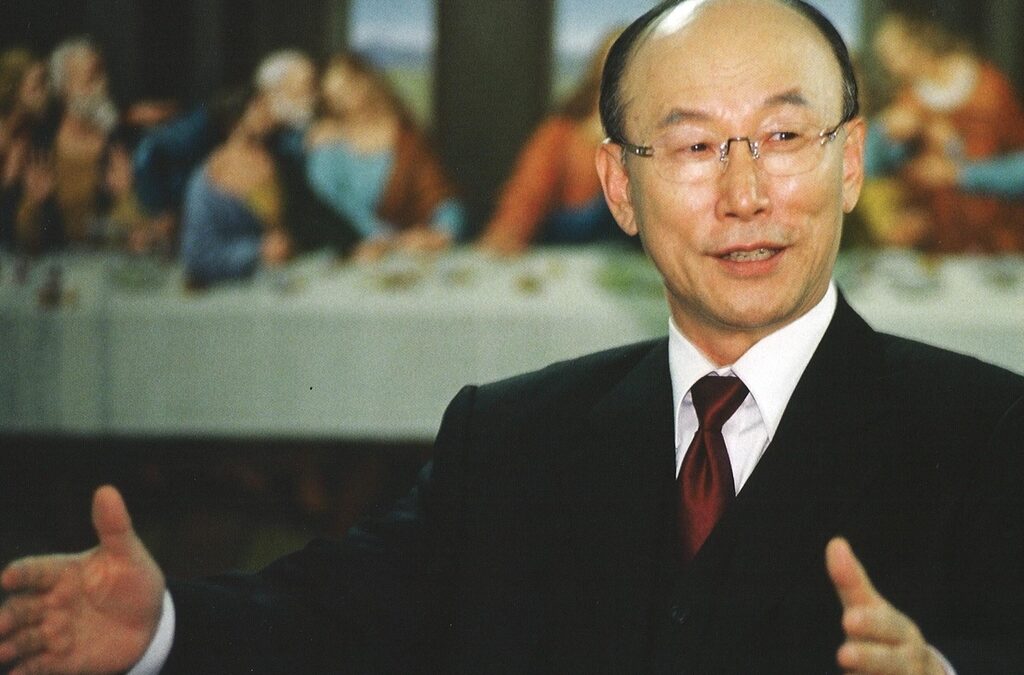
For those who become pastors after studying theology, the term management capability is often unfamiliar, since it is a field never addressed in seminary. Interestingly, Peter Wagner—widely regarded as one of the greatest church growth scholars of our time—evaluated the growth of Yoido Full Gospel Church as being largely due to Pastor David Yonggi Cho’s management and administrative ability. Pastor Cho’s management skills, when exquisitely combined with his charisma, resulted in unprecedented church growth.
The charisma Pastor Cho possessed provided the driving force that led members of Yoido Full Gospel Church to continually take pride in their church and the gospel, inviting relatives and neighbors to church (evangelism). Consumers naturally tend to follow brands when purchasing products. Pastor Cho actively mass-marketed the Full Gospel and his church through clear branding—salvation, divine healing, blessing, and the Holy Spirit movement. As a result, during the 1980s, Yoido Full Gospel Church was able to register as many as 10,000 new members every month.
However, Pastor Cho’s charismatic leadership did not stop at attracting people to church. If charismatic leadership—such as powerful preaching and effective prayer—was the force that brought people in, then management capability was the ability to create systems that could pastor the massive influx of people and ensure those systems operated smoothly. Through his exceptional management skills, Pastor Cho provided the momentum that enabled the multitudes who flocked to his church to remain, form community, and continue growing together.
His management ability did not end there. Even after his church had already grown large, he continually emphasized setting bigger goals for himself, his ministry team, cell leaders, and all church members in evangelism and church growth. To achieve those goals, he repeatedly restructured systems and trained leaders, placing them strategically in the right positions.
This stands in contrast to the notion that “the church grew simply because everyone worked hard.” If an organization grows merely because people worked hard, a secular observer might call it a coincidence, while believers might attribute it to “the grace of the Lord.” While this may sound humble and faith-filled, such an explanation can contain serious theological and logical flaws. If growth is solely due to God’s grace, does that imply that churches that worked hard but did not grow are somehow cursed?
Pastor Cho grew his church through clear goal-setting and strategic, intentional effort aimed at achieving those goals. This was not accidental growth but calculated growth. Because it was calculated, he could predict how many members the church would have once certain goals were reached. Consequently, he had to continually construct new church buildings and expand existing ones. In an interview with a media outlet, when asked to summarize his pastoral ministry in one sentence, he responded:
“My ministry, in a word, was massive civil engineering. From Seodaemun to Yoido, I had no choice but to continually build and expand church buildings in order to accommodate the crowds that came like clouds.”
Some attempt to downplay the growth of Pastor Cho and Yoido Full Gospel Church by saying, “Of course, people gather when you preach blessing and prosperity.” This is a shortsighted evaluation that fails to understand leadership. What pastor does not pray and preach so that their congregation may live lives of blessing and prosperity? If that alone caused explosive growth, then wouldn’t every church on this earth be experiencing it?
Peter Drucker, known as the father of modern management, once said, “The success or failure of everything depends on leadership.” If this is true, then attributing the growth of Yoido Full Gospel Church merely to messages of blessing and prosperity—while ignoring Pastor Cho’s charismatic leadership and management capability—is an overly simplistic assessment lacking critical analysis. Apple and Samsung both produced and sold smartphones, yet the iPhone and Galaxy dominated the world while Nokia disappeared. The issue was not the phone itself, but management and leadership. Behind the success of the iPhone and Galaxy stood the leadership of Steve Jobs and Lee Kun-hee.
In the United States, there are many evangelists who preach as well as Billy Graham. However, Billy Graham alone exerted such massive influence on America and the world through large-scale evangelistic crusades. Scholars who studied his ministry point out that one key reason for his success was his systematic preparation, execution, and follow-up of evangelistic events.
More specifically, the evangelistic sermon itself was not the entirety of the crusade. According to Billy Graham’s own briefings, the preaching event accounted for only about 10% of the overall evangelistic campaign. The remaining 90% consisted of systematic and thorough evangelism training and execution, large-scale promotion (mass marketing) using the Billy Graham brand, and year-long discipleship and church-integration systems for newly converted believers. In short, what made Billy Graham’s crusades exceptional was not merely preaching or events, but organizational strength and management capability.
Leveraging these strengths, he conducted evangelistic crusades worldwide for over 60 years. Though Billy Graham has passed away, his son Franklin continues to actively carry out evangelistic ministry across America and the world using the organizational systems and leadership in evangelistic management handed down from his father.
As seen above, among the leadership qualities I have analyzed in Pastor David Yonggi Cho, the most outstanding elements are vision, risk-taking, and management capability. Of course, these are not the only reasons his church and ministry grew. Exceptional ministry is impossible without spiritual elements that transcend human leadership, regardless of culture or context. Moreover, beyond the leadership traits discussed here, Pastor Cho undeniably possessed many other outstanding leadership qualities.
Pastor Cho has now left us. One generation passes, and another comes—this is God’s principle. A new generation of pastors equipped with spirituality and leadership will continue to arise. I do not doubt that the God who used Pastor Cho will also use them to carry out unprecedented ministries.
I offer this exhortation to the next generation of pastors: Do you desire to become an exceptional servant of God? Then do not stop at developing spirituality—develop leadership as well.
For the rise and fall of everything ultimately depends on leadership.