
The natural environment of our planet is showing troubling signs: the pandemic, the earthquake in Türkiye, the unprecedented heavy snow in California, and the severe cold that has frozen much of the United States. Beyond this, the global political landscape is fraught with tension reminiscent of the Cold War era—Russia’s war with Ukraine, North Korea’s nuclear ambitions, and growing military friction between the United States and China. If these trends continue unchecked, the day of humanity’s destruction may not be far off. We are living in an age that desperately needs intercessory prayer for all humankind.
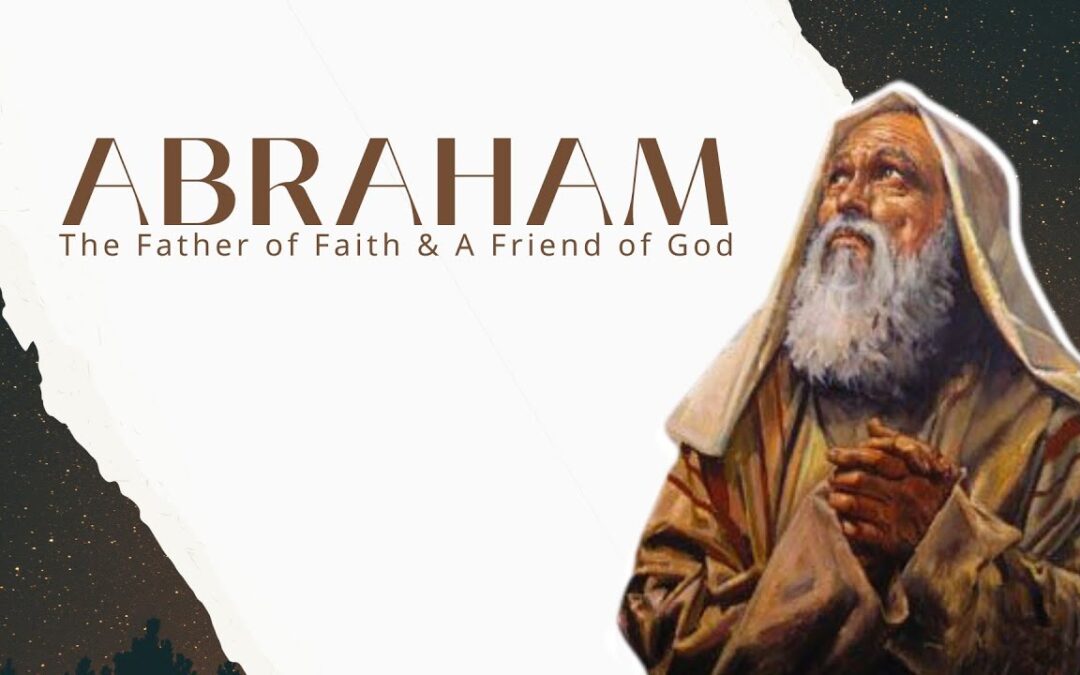
The Bible presents Abraham as one of the greatest figures in human history. Through faith and obedience, he reversed the separation from God caused by his ancestors in humanity’s early history, reconciling God and humankind once again. As a result, those who approach God with the same faith and obedience as Abraham, the father of faith, can receive and enjoy the original blessings God intended at the beginning of creation. The structure of Genesis shows how Abraham reversed the four acts of rebellion and betrayal against God in humanity’s early history recorded in Genesis 1–11: the incident in the Garden of Eden, the first murder, the Flood, and the Tower of Babel.
Adam, the central figure of the Garden of Eden, was entrusted with managing everything in the garden, with only one restriction: he was to acknowledge God’s ownership of the fruit from the tree of the knowledge of good and evil. Yet Adam ignored God’s command and rebelled. The result was devastating—not only for Adam himself but for all humanity—bringing sin and death. Abraham, however, acted differently. In a tribal society, leaving one’s homeland, relatives, and father’s house meant uprooting oneself entirely, with no guarantee of safety. Yet when God commanded him, Abraham, the father of faith, obeyed, placing his entire existence in God’s hands.
The first murder in human history was fratricide. Relational conflicts often arise not with strangers, but with those closest to us—our own family members. Religious conflict within the family was expressed through the murder of a brother. Abraham’s reversal of family conflict, however, offers a refreshing example. When his possessions and those of his nephew Lot grew within a limited land and threatened to create strife, Abraham—though the elder—graciously allowed Lot to choose the better land first. Through Abraham’s generosity, the blessing of God that had nearly failed to reach humanity because of Cain’s failure was made available once again.
The Flood occurred because human sin and wickedness had reached their peak. God decided to destroy humanity and instructed Noah: “I will bring a flood to wipe out every living creature. Quickly build an ark and save yourself and your family.” Genesis 6:22 records Noah’s response: “Noah did everything just as God commanded him.” The result of Noah’s obedience was that all humanity perished except for Noah’s family.
Ancient Jewish rabbinic interpretation, known as the Midrash, imagines a conversation between Noah and God after the Flood. While not Scripture, it reflects the thinking of the time:
Noah said to God, “God, you are called the Lord of the universe and a compassionate God. Should you not have shown mercy to your creatures?”
God replied, “Foolish Noah, only now do you speak. When I told you I would judge humanity with a flood, you kept silent and busied yourself building the ark. What I expected from you then was for you to plead with me to show mercy to humankind. You built the ark only for yourself, and now, after humanity has perished, you finally speak.”
In the eyes of the ancient rabbis, Noah’s obedience was cold and mechanical. He failed to intercede with God in prayer to avert judgment. As a result, although Noah survived, he and his descendants continued to live in sin, eventually leading to the Tower of Babel. The Flood destroyed sinful humanity, but even after the waters receded, the human heart—the source of sin—remained corrupt. If the Midrash’s interpretation holds, God does not desire mechanical obedience from His followers, like robots or computers stripped of compassion. God desires a full, passionate response to His calling—intercessory prayer offered with our whole heart. Tragically, Noah acted as a passive bystander, watching humanity perish rather than standing as a courageous prayer warrior pleading for mercy.
Abraham, however, acted differently. In Genesis 18, when he learned of God’s intention to destroy Sodom and Gomorrah, he approached God with profound compassion and love for humanity, daring to question Him: “Will you indeed sweep away the righteous with the wicked? … Shall not the Judge of all the earth do what is just?” (18:25). While the Korean translation sounds polite, the Hebrew text conveys Abraham’s near-blasphemous urgency: “God, to kill the righteous along with the wicked is despicable! To treat the righteous and the wicked alike is utterly shameful, God!”
Have you ever seen anyone pray like this? Abraham’s cry demonstrates a deep reverence that honors God’s glory: “God, to act in such a way is not fitting for your holiness. If you handle matters like this, your holiness will be diminished.” Abraham’s concern extended far beyond human well-being; he pleaded for God’s honor and righteousness to remain intact.
Abraham’s protest contrasts sharply with Noah’s silence. Abraham became the first person in history to attempt, through dialogue with God, to alter God’s course of action. Today, humanity desperately needs such intercessors. Even now, God is seeking people of prayer who approach Him with courage, compassion, and boldness.